































Why this exists. My whole story.
Want The Full Context Of Why This Exists?
Inside the story
The American Dream Didn't Die by Accident. It Was Murdered by Bad Economics.
- The New Reality. The Dream Was Delayed. Then Denied.
- Why You Feel Like You’re Losing Your Mind Watching the News.
- Housing Crisis. From Home to Hostage.
- Neo-Feudalism Isn't Coming. It's Here.
- “You'll own nothing. And you'll be happy.”
- The Quiet Wealth Transfer. From Wages to Debt.
- The Death of 'Experts'.
- Stop Outsourcing Your Survival.
- Rebel Economist Armor. Self-Defense at Scale
- This Isn't a Course. It's Protection.
- Why I've Been Fighting This Battle for 50 Years.
- That feeling you have? That isn’t confusion. That’s your bullsh*t detector going off.
- How I predicted the 2008 financial crisis YEARS before it happened.
Read Steve's full story (optional)Read Steve's full story
The American Dream Didn't Die by Accident. It Was Murdered by Bad Economics.
Why $100k is the new $60k, why the "starter home" now belongs to 40-year-olds, and why trusting the "experts" is the most dangerous financial move you can make.
From the desk of Professor Steve Keen
I am 73. I have spent 50 years of my life fighting the economic establishment. I have effectively been blacklisted by universities, ignored by the media, and ridiculed by the very "experts" who drove the global economy off a cliff in 2008.
I have lost friends.
I have given up a quiet life.
I have paid the professional price for telling the truth.
I have absolutely nothing left to lose.
I am not trying to get a job at the Federal Reserve. I am not trying to get invited to Davos.
I don't answer to a dean, a board of directors, or a pension I'm afraid to lose.
I answer only to the mathematics of reality.
So when I tell you that the system is flashing red again - that the same indicators I saw in 2005 are screaming at me today - you can be damn sure I am not saying it to sell newspapers.
I am saying it because I refuse to go to my grave watching good people like yourself get crushed by a machine they don't understand.
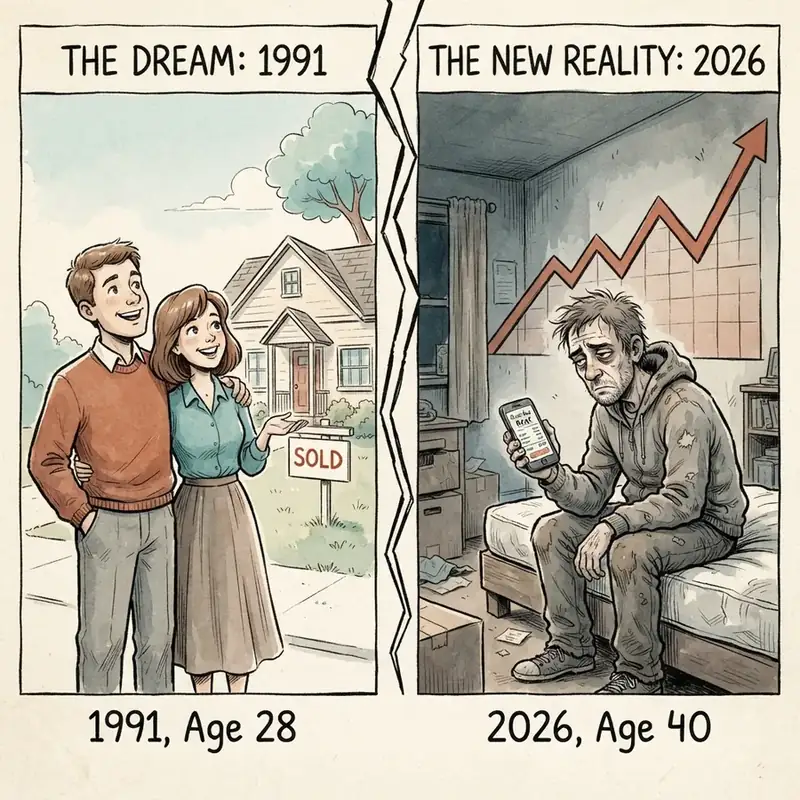
The New Reality. The Dream Was Delayed. Then Denied.
You remember what the "Dream" was supposed to look like.
You get a job. You work hard. By your mid-20s, you buy that house with the white picket fence. You raise a family on one income. You retire with dignity.
Look around you. That world is gone.
It wasn't stolen by immigrants, and it wasn't lost to "bad luck." It was structurally engineered out of existence by a financial system designed to inflate assets while suppressing wages.
In the United States in 2026, the median age of a first-time homebuyer is still 40 years old. That ties the all-time high. Back in 1991, it was 28.
That isn't a "vibe shift." It is a mechanical failure of the economy.
Say you're earning $100,000 a year - a number your parents would have called "wealthy" - but it feels like $60,000. That feeling is not in your head. It is in the data.
Since 2000, U.S. median household income has risen about 108% in nominal terms. But after adjusting for inflation, real incomes are up only about 19%.
Meanwhile, median home prices are up 200%. They have tripled.
AKA Home prices have risen roughly 10x FASTER than your real purchasing power. Home prices are up 200% while your real purchasing power has grown about 19%.
In 1985, a home cost 3.5x your income.
Today, the national ratio is nearly 5x ($416,700 against $87,460). In Los Angeles, it's 12.5x.
This makes the concept of the 'American Dream' mathematically impossible for most families.
You aren't bad with money. The game board was tilted against you before you even rolled the dice.
You can't see this tilt on a standard spreadsheet. Standard economics hides these mechanics. You need a way to visualize the flows that are draining your bank account before they even hit your ledger.
If you keep relying on 'budgeting harder' while the macro-tide is going out, you will drown. You will spend the next decade cutting coupons while your net worth is silently eroded by asset inflation you never saw coming.
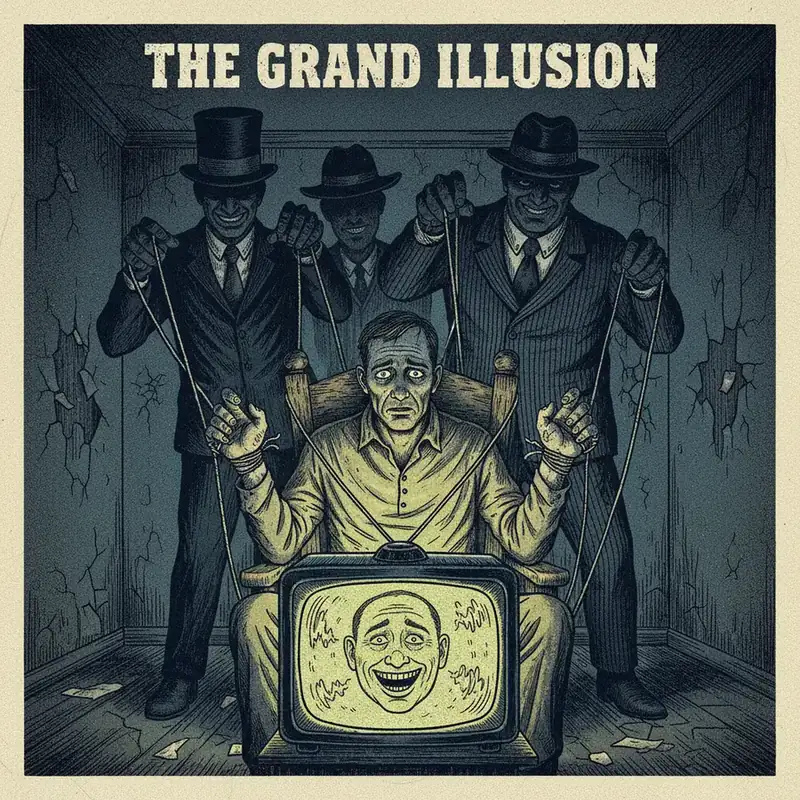
Why You Feel Like You’re Losing Your Mind Watching the News.
You turn on the TV, and a smiling pundit tells you "inflation is cooling."
You look at your grocery receipt, and the price of essentials has doubled.
They tell you the "labor market is resilient."
You check LinkedIn, and three of your smartest friends just got laid off.
They are lying to you.
Not necessarily because they are evil (though some are), but because they are using a broken compass. They are reading from the same Neoclassical textbook that assumes the economy is always moving toward "equilibrium."
When they say "the economy is strong," they are looking at GDP.
I am looking at the debt burden crushing the actual producers of wealth.
When they say "inflation is down," they are looking at a rate of change.
I am looking at the permanent loss of purchasing power in your wallet.
If you keep trusting their weather report, you are going to get caught in the hurricane without an umbrella.
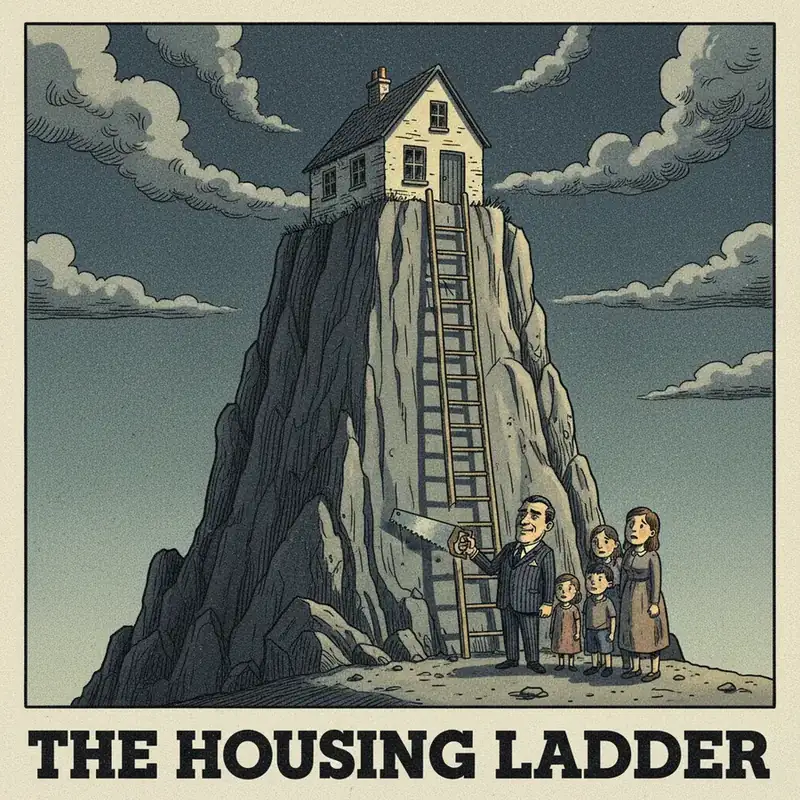
Housing Crisis. From Home to Hostage.
Nowhere is the failure of Neoclassical economics clearer than in housing.
In the UK, a typical home now costs nine times a household’s disposable income - the worst affordability since the 1870s. We have regressed to the Victorian era.
Prices used to track inflation. Now, on average they DOUBLE every decade.
Not a typo.
Why? Because banks have become "non-existent middlemen."
You cannot buy a house without them, but at these prices, they cannot safely lend to you. The bottom rungs of the ladder have been sawed off by leverage.
In London, mortgages are now effectively 20x the property’s rental income. That is a Ponzi scheme dynamic. The system didn't fail accidentally.
It was optimized for high asset prices, not for human habitation.
This isn't random bad luck. If you model the banking sector correctly - using double-entry bookkeeping instead of 'supply and demand' curves…
You can literally see the pressure building in the pipes years before the explosion
If you ignore these pressure gauges, you become the bag-holder.
You’ll be the one buying at the top of the bubble just as the credit engine stalls, locking your family into negative equity for a generation.
Neo-Feudalism Isn't Coming. It's Here.
The dream of ownership is being systematically dismantled. This isn't a market correction; it's a structural transfer of wealth. Here's what they don't want you to see.
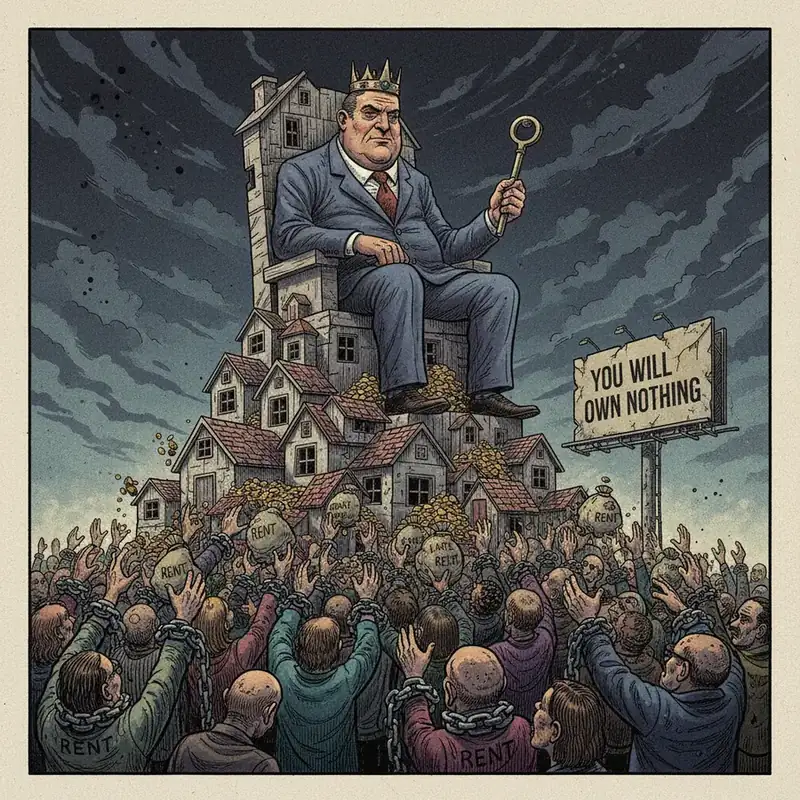
“You'll own nothing. And you'll be happy.”
Locked out for life. This is the part that keeps me up at night.
In 2016, the World Economic Forum (WEF), published an essay titled "Welcome to 2030. I own nothing, have no privacy, and life has never been better."
They claimed it was just a 'scenario for discussion.'
But look around. That scenario is becoming reality.
When the median household cannot afford the median home, we are not in a "market." We are in a Neo-Feudalist trap.
Unless we see a structural change - or a collapse - you, your children and grandchildren are being pushed into permanent renter status.
They will be tithed a portion of their income to a landlord class forever.
And without the support of the masses or government policy change, we can do nothing about it.
But you don't have to fly blind. Once you understand the dynamics of debt deflation, everything changes.
Stop reacting to headlines. Start predicting the next squeeze. Like I did, years before the 2008 collapse.
If you don't understand these dynamics, you are collateral damage.
When the next 'shock' hits, you won't be positioned to protect your assets - you’ll be forced to sell them for pennies on the dollar to the institutions that did see it coming.
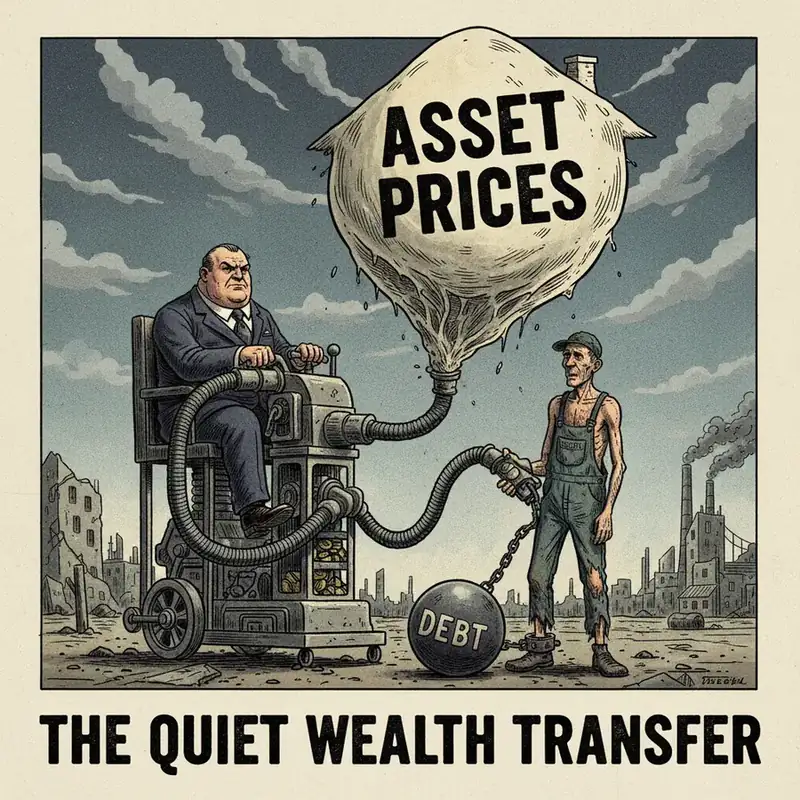
The Quiet Wealth Transfer. From Wages to Debt.
For decades, the story you were sold was simple: "Work hard, get educated, and you’ll be fine."
But behind the scenes, the engine of the economy was swapped out. We stopped powering growth with wages and started powering it with private debt.
The real macro bomb was never public debt - it was private debt. Before the 2008 crisis, U.S. government debt was about 60% of GDP. But private debt had surged up to 170% of GDP.
And that trend didn't stop.
Today, private debt remains elevated at around 140% of GDP (Federal Reserve, mid-2026).
Every major modern crisis - the Great Depression, 2008 - was preceded not by government deficits, but by a collapse in private credit. When that credit engine stalls, the economy crashes. Mainstream economists ignored this. They told you banks were just "intermediaries." They lied. Banks create money, and they pumped that money into existing assets - houses - rather than factories or innovation.
You got wage stagnation.
They got asset inflation.
This wealth transfer is invisible to the naked eye, but it shows up instantly when you track the 'Credit Impulse.'
It’s a simple metric, but you won’t find it in any standard economics course in University. You have to learn to calculate it yourself. If you don't track the Credit Impulse, you are flying blind in a storm. You’ll invest in 'growth' when you should be in 'defense.'
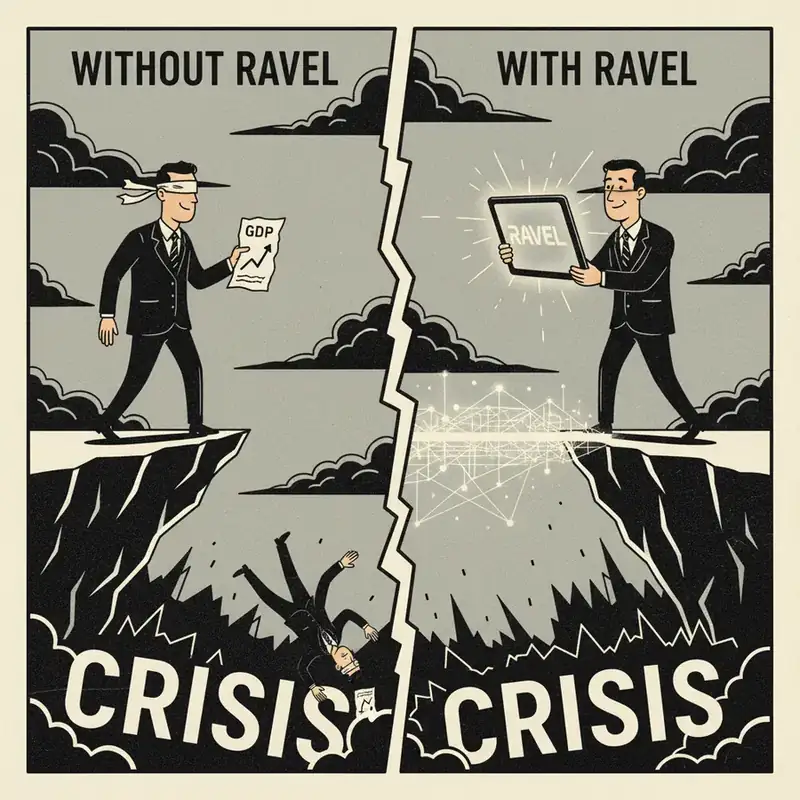
And you’ll wonder why your portfolio crashed while the 'experts' and politicians on TV told you ‘everything was fine.’ Reminds me of this funny picture.

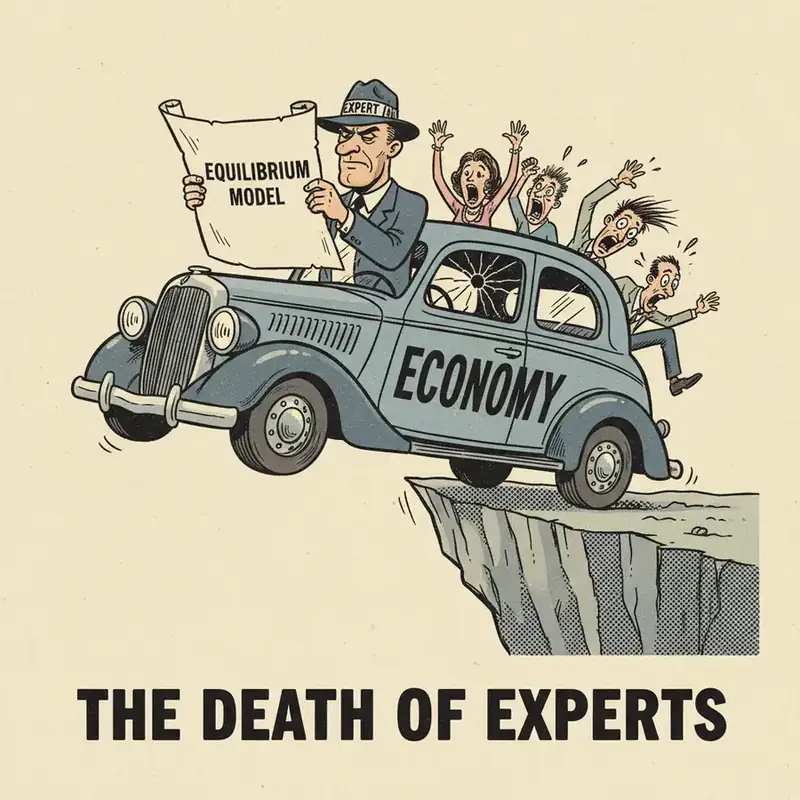
The Death of 'Experts'.
You might be thinking, "Surely the experts see this coming."
Do not bank on it.
In March 2007, just months before the entire system started melting down - Fed Chairman Ben Bernanke told Congress that growth was strong and the subprime mess was 'contained.'
The same man who missed the biggest crisis since the 1930s was awarded the Nobel Prize in 2022 for his 'research on banks.'
You cannot make this up. Reality is stranger than fiction.
He missed the biggest crisis since the 1930s because his models ignored private debt.
He treated banks like piggy banks, not money factories.
If the doctor misdiagnosed the disease last time, why are you trusting his prescription now.
They were looking at static equilibrium models.
I was looking at a dynamic system.
The difference isn't just academic. It’s the difference between seeing the cliff and driving right off it.
If you keep navigating with their broken maps, you will crash. You cannot protect your retirement, your assets, or your family using the same models that failed to predict the last 3 recessions. You’ll need something that has been proven to predict a recession before.
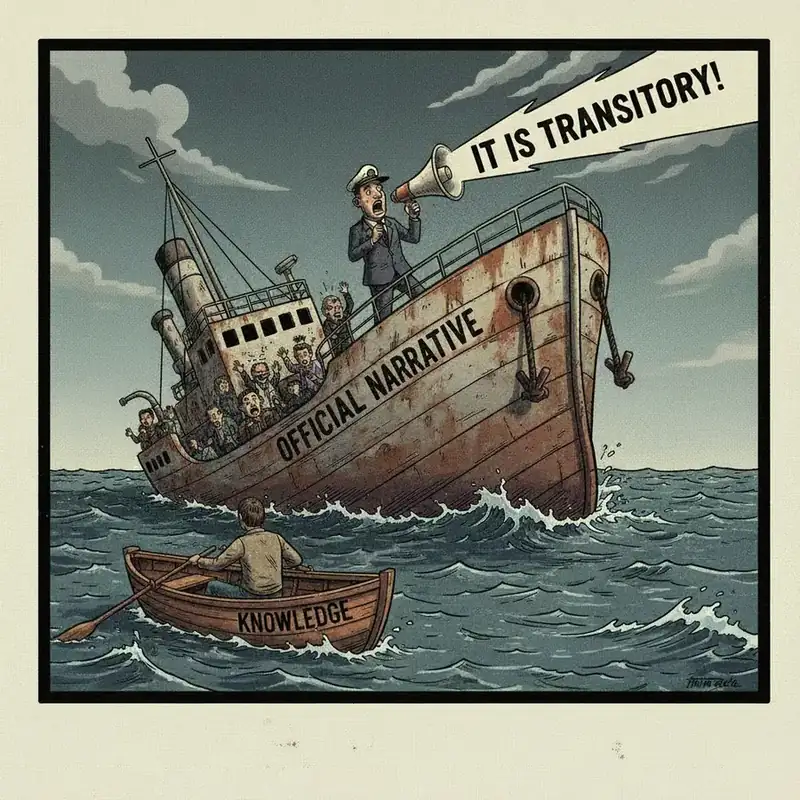
Stop Outsourcing Your Survival.
There is a dangerous instinct we all have. When things get scary, we want to look for an "authority" moral figure to tell us what to think.
We want to believe that the Fed Chair, the Treasury Secretary, or the bank CEO has a plan.
But after 50 years of doing this research and being around these circles, I can assure you…
They do not have a plan. They have a panic button.
Deep down, you already know this.
You knew buying a house in 2007 felt wrong, even when they told you prices only go up.
You knew printing trillions of dollars in 2020 would cause inflation, even when they told you it was "transitory."
You know right now that the "official" numbers don't match the reality of your life.
You need to stop suppressing that instinct and start arming it.
If you wait for the "all clear" signal from the media, you will be waiting until it is too late. The media is a lagging indicator. They report the crash after the smoking ruin.
You must become your own expert. You must have the tools to verify the data yourself.
Because in this economy, ignorance is not bliss. Ignorance is bankruptcy.
If you outsource your thinking to the people who broke the world, you will go down with their ship. You need to build your own lifeboat.
Rebel Economist Armor. Self-Defense at Scale
In an unstable world, understanding the real mechanics of the economy isn't just an academic exercise. It's a critical tool for survival. This is your armor against the next financial storm.
This Isn't a Course. It's Protection.
In today's world, learning economics is no longer an intellectual hobby - it is an essential act of self-defense.
You need to understand how the machine ACTUALLY works:
The Credit Impulse: Why changes in private debt, not GDP, predict the crash.
The Money Creation function: How banks actually work (vs. how textbooks say they work).
The Dynamics of Collapse: Why the "Soft Landing" is a myth sold to bag-holders.
The system is rigged. But if you can see the machinery, you don't have to be crushed by it.
Don't outsource your future to the people who broke the world.
You don't need a PhD to do this. You just need the right tools.
Imagine having a weather radar for the economy that shows you exactly when the storm is hitting your sector.
This is about protecting what you have built.
You worked hard for your money. You sacrificed a lot, working hard at your job. Or are sacrificing a lot building your own. You saved to provide for your family. Or are saving to provide for your future family. Do not let a blind economist destroy that legacy.
You need to know when to be aggressive and when to build the fortress walls. You need to know if your industry is about to be starved of credit before the bank calls your loan.
If you don't have this radar, you are a sitting duck. You’ll be the employee blindsided by layoffs or the business owner shocked by a sudden drop in orders - all because you couldn't see the credit contraction heading your way.
Why I've Been Fighting This Battle for 50 Years.
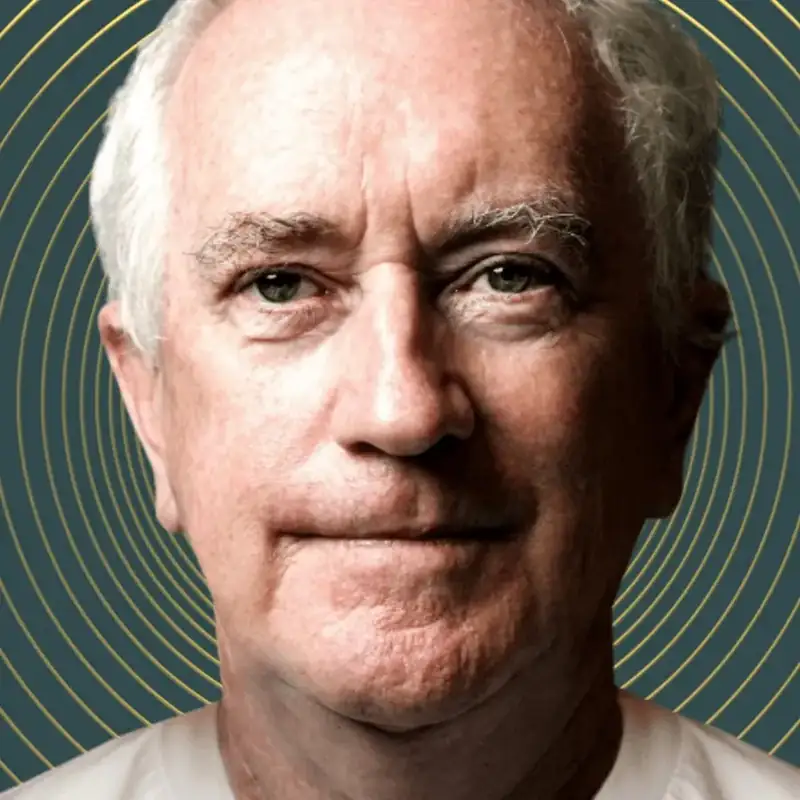
I was 20 years old when I realized I was being lied to.
It was 1973. I was an undergraduate at the University of Sydney, and the real world was on fire. The oil crisis had hit. Inflation was skyrocketing, and unemployment was rising at the same time - a phenomenon called "stagflation."
According to the textbooks I was forced to read, this was mathematically impossible. The economic models insisted you could have inflation or unemployment, but never both.
I sat in lecture halls watching professors draw elegant curves on chalkboards that described a world of "equilibrium" and "perfect competition." A world where banks didn't exist, debt didn't matter, and crises were just accidental bumps in the road.
I looked at the chalkboard. Then I looked at the newspaper headlines.
The map didn't match the territory.
Most students just memorized the lies to pass the exam. I couldn't do it.
I led a student revolt that year. We demanded to be taught economics that actually engaged with reality - with the messy, chaotic, debt-fueled world we actually lived in.
We won the battle, but we lost the war.
The university establishment crushed us, and Neoclassical economics took over the world.
Fast forward 50 years, and I am seeing the exact same look in your eyes that I had in mine.
You look at the "official" inflation numbers, and then you look at your grocery bill, and you know something is wrong. You hear the Fed Chair talk about a "strong economy," but you see your friends getting laid off and your children giving up on ever owning a home.
That feeling you have? That isn’t confusion. That’s your bullsh*t detector going off.
And you’re right to feel that. Just like I have.
I have spent my entire adult life fighting the "experts" because I know where their bad math leads.
It leads to 2008.
It leads to the housing crisis.
It leads to a world where the rich get bailed out and the rest of us get the bill.
I fought them in 1973 because I was an angry student.
I fight them today because I refuse to let these delusions destroy what is left of our society.
...It cost the rest of the areas of my life to do so. But I know it’s worth it. For the greater good.
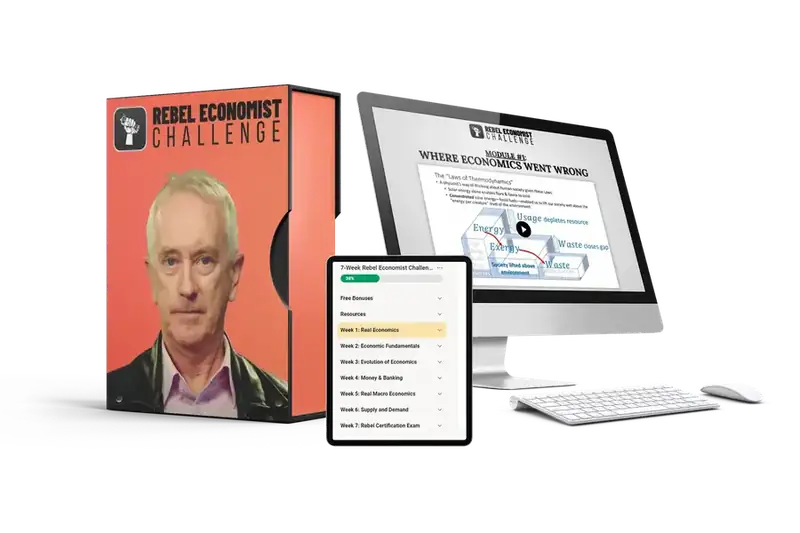
I didn't build the Rebel Economist Challenge just for academics and government leaders.
I built it for the people who are tired of being told to ignore their own eyes.
It took me decades to build that map from scratch. You don't have to wait that long.
I am challenging you: Can you learn 50+ years of real economics in the next 7 weeks?
I have condensed half a century of fighting, predicting economic crises, and winning arguments into a 7-week roadmap.
I am handing you the keys to the machine. Handle them with care.
If you try to figure this out alone, you’ll get lost in the noise of 24-hour news cycles and contradictory theories. You will stay paralyzed while the window to prepare for the next crisis slams shut.
Learning alone using YouTube, textbooks, and University courses will waste years of your life. How do I know? Because I did it the hard way. And unfortunately for me, I can’t get those years back.
But I made this system so YOU CAN.
How I predicted the 2008 financial crisis YEARS before it happened.
People often ask me, "Steve, how did you see the 2008 crash when the Federal Reserve missed it?"
I didn't use a crystal ball. I tracked private debt. After the crash proved me right, I built a software called Minsky to help others see what I saw.
I started building Minsky over a decade ago because I was tired of arguing with economists who used static spreadsheets to model a dynamic world.
Minsky was the first program that allowed you to model the economy as it actually is: a complex system of monetary flows, where banks create money out of thin air and debt drives the business cycle.
It was the tool that proved the "experts" wrong.
But Minsky was just the prototype.
Over the last several years, I have been secretly working on its successor.
Something more powerful, more intuitive, and designed for the modern era.
My life’s work. My 50+ year career downloaded into one software:
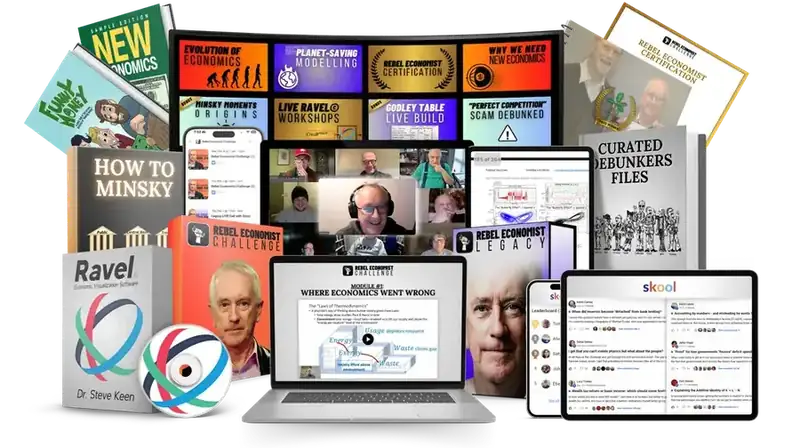
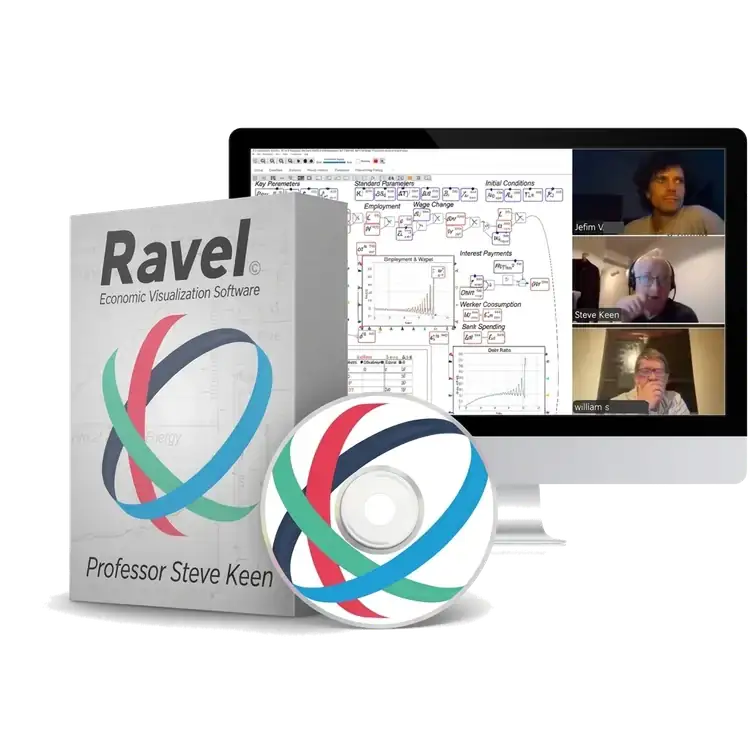
I call it Ravel.
Ravel is Minsky on steroids. It is the only software in the world that allows you to perform double-entry bookkeeping at the speed of thought.
Standard Economics: treats money like a neutral veil. It ignores the banks. It ignores the debt. It leaves you blind.
Ravel: forces you to account for every single dollar. It shows you "Player 3" - the Bank - in every transaction.
When you look at the economy through Ravel, the "chaos" of the news cycle disappears. You stop seeing random events and start seeing the hydraulic pressure of the credit system.
You see exactly where the money is coming from, where it is going, and when the pipes are about to burst.
This is the tool I use in all my debunking videos. It is the tool I used to model Keynes’ revolutionary "Bancor" system - something no other economist has achieved in 80 years.
And for the first time ever, I am handing this tool to you.
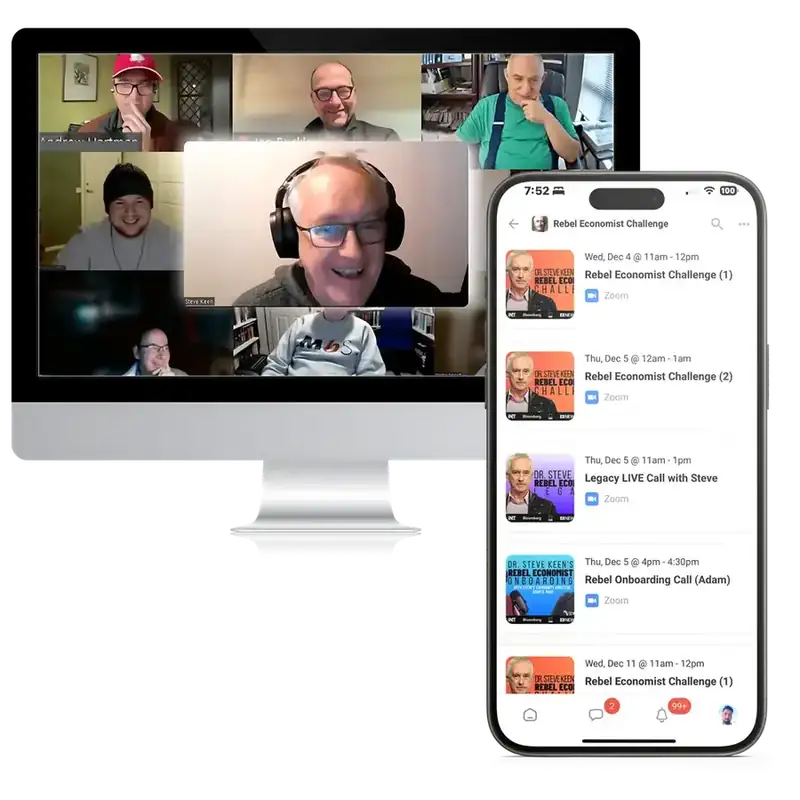
Inside the Rebel Economist Challenge, you won't just learn theory. You will get your hands on Ravel. You will build the models. You will see the matrix for yourself.
If you can't run these simulations, you are gambling with your future. You are betting your life savings on 'hope' and 'official narratives' instead of mathematical certainty.
If you want economic certainty grounded in the real world - this is it.
Professor Steve Keen

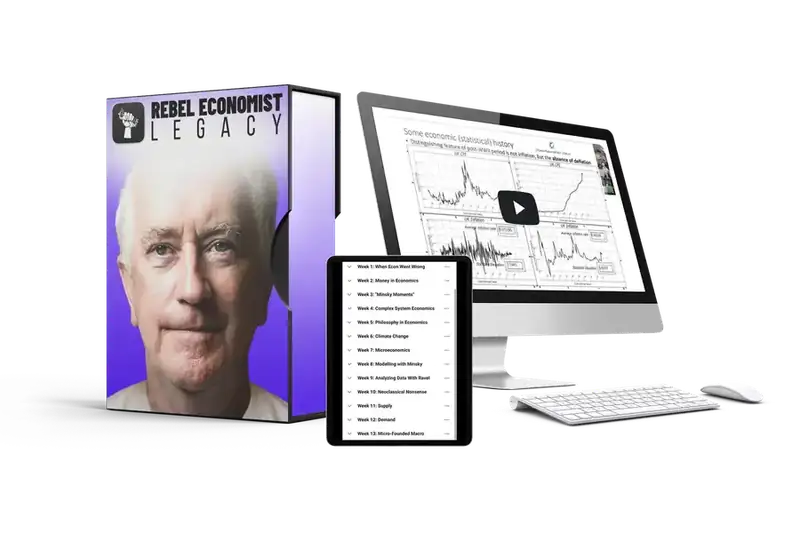 Solves: too much material and no clear path. Every lecture is sorted by topic: debt, money, housing and energy. Go straight to the one you need.
 Solves: no one to ask who really gets it. Post your question and I answer it.